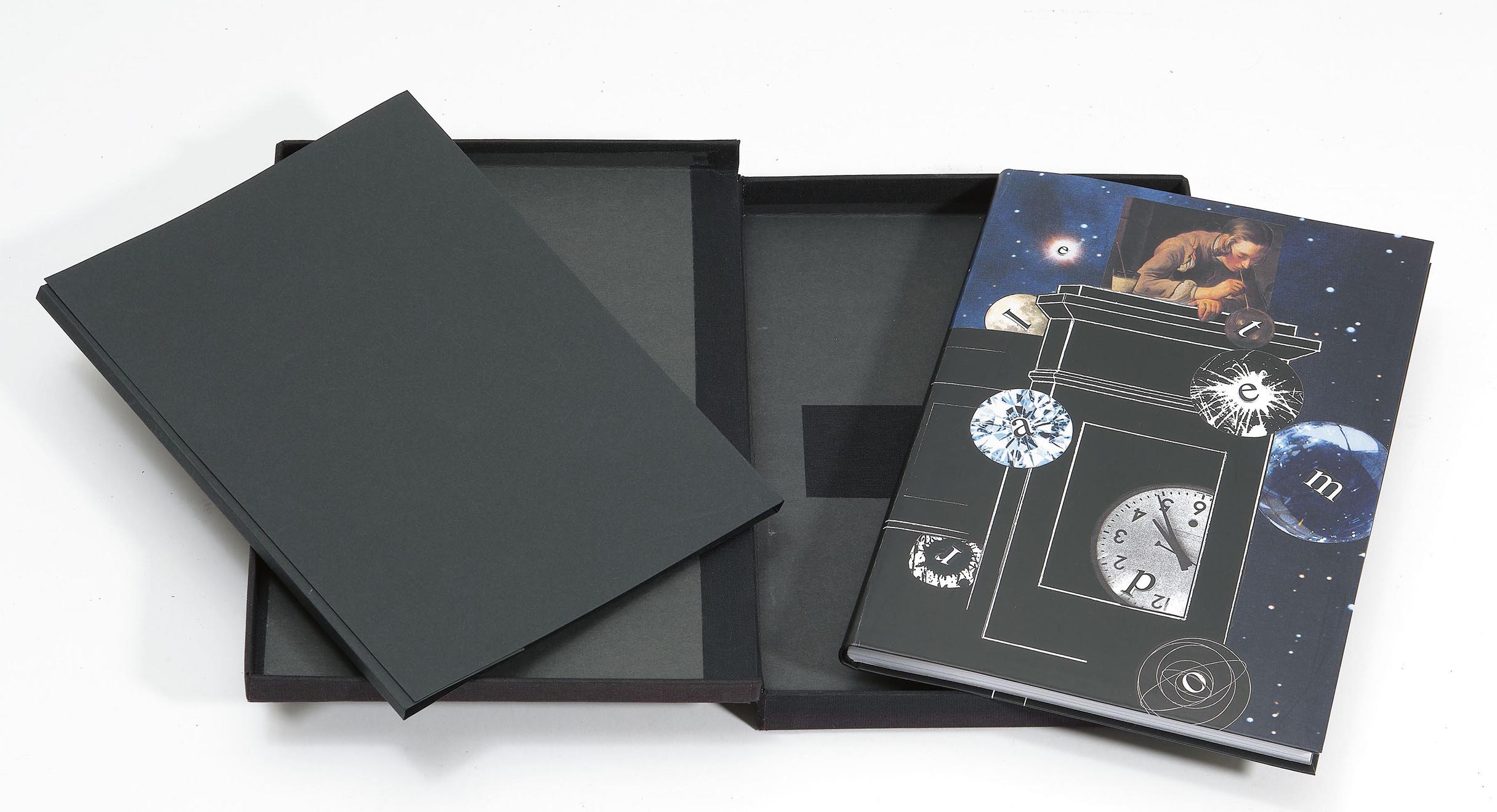
Promenade, 2010
GPE-0122
Light Jet Print
Cotton paper
Ten plates 29.7 x 21 cm each
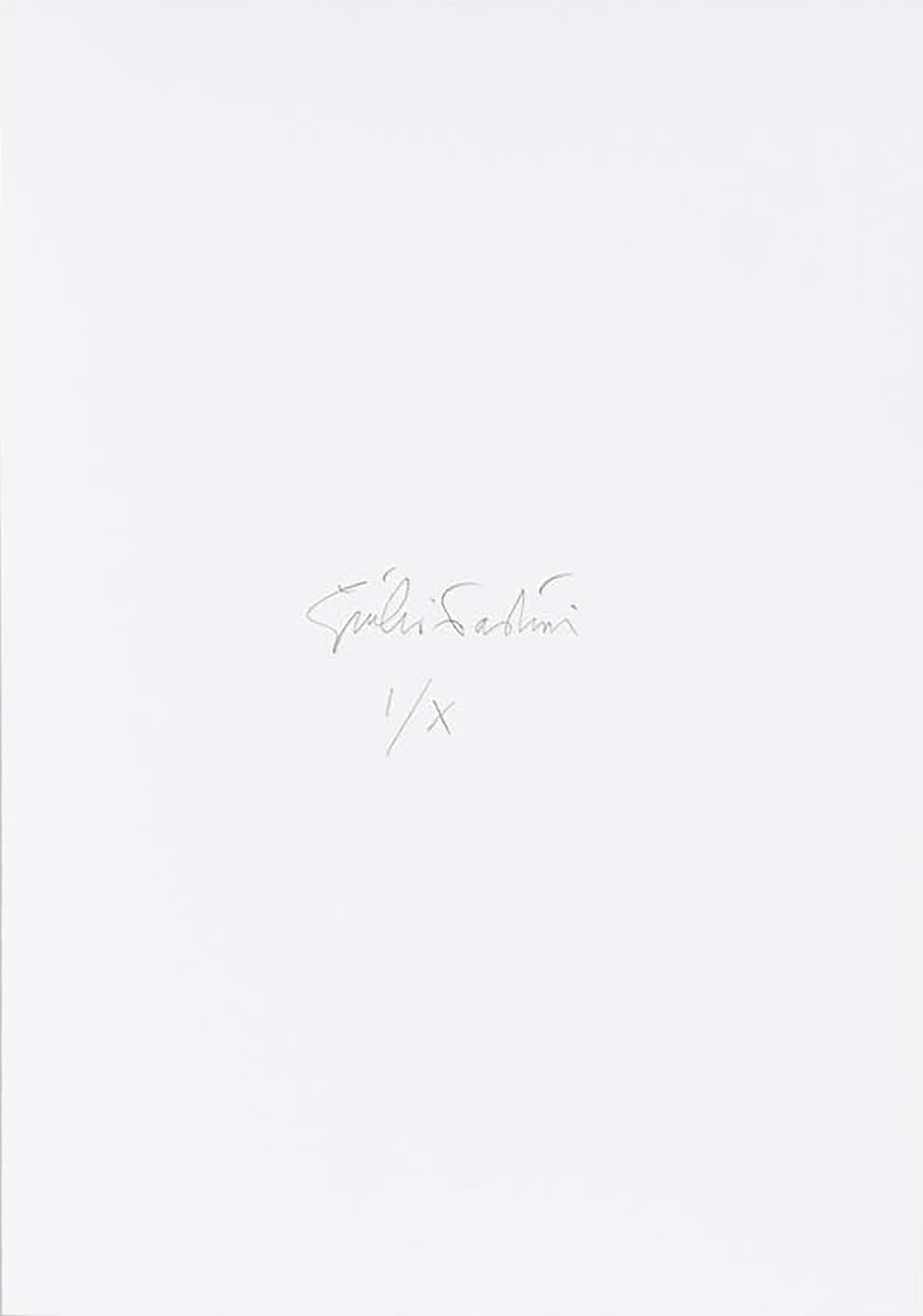
Signed on the verso of the tenth plate, centre: “Giulio Paolini”
Autograph numbering on the verso of the tenth plate, centre
30 in Arabic numerals from 1/30 to 30/30
10 in Roman numerals from I/X to X/X
Edizioni Studio Dabbeni, Lugano
The portfolio was produced by the Studio Dabbeni, Lugano, on the occasion of the solo show of Paolini's work, from 12 November 2010 to 26 February 2011. The ten plates in the portfolio harken back to the project conceived for issue number 70 of the magazine temporale, published by Studio Dabbeni on the occasion of the exhibition.
Black cloth-covered box, 32 x 22.5 x 3 cm, lid with titles in white (author, titles). The plates inserted in a black sleeve with a flap are accompanied by a copy of issue number 70 of the magazine temporale, which includes the colophon (page 2).
temporale 23, no. 70 (Lugano: Studio Dabbeni), 2010. 29.7 x 21 cm, 136 pages, paper binding, cover design by the artist. Reproduction of the edition and documentation of the solo exhibition of Paolini's work at the Studio Dabbeni, with a text by the artist and a essay by Maddalena Disch, contributions related to the artists Jacopo Miliani, Flavio Paolucci, and Jakob Kolding represented by the gallery, 30 years of Studio Dabbeni 1979-2009, colour illustrations, in Italian and in English. Print run unknown, 40 numbered and signed copies accompanied by the edition in a special case.
The magazine temporale includes a colophon for the portfolio with information about the number of plates, measurements, inscriptions by the artist, edition size, printing technique, type of paper, publisher, and date of printing (2010). Signature and numbering at the centre.
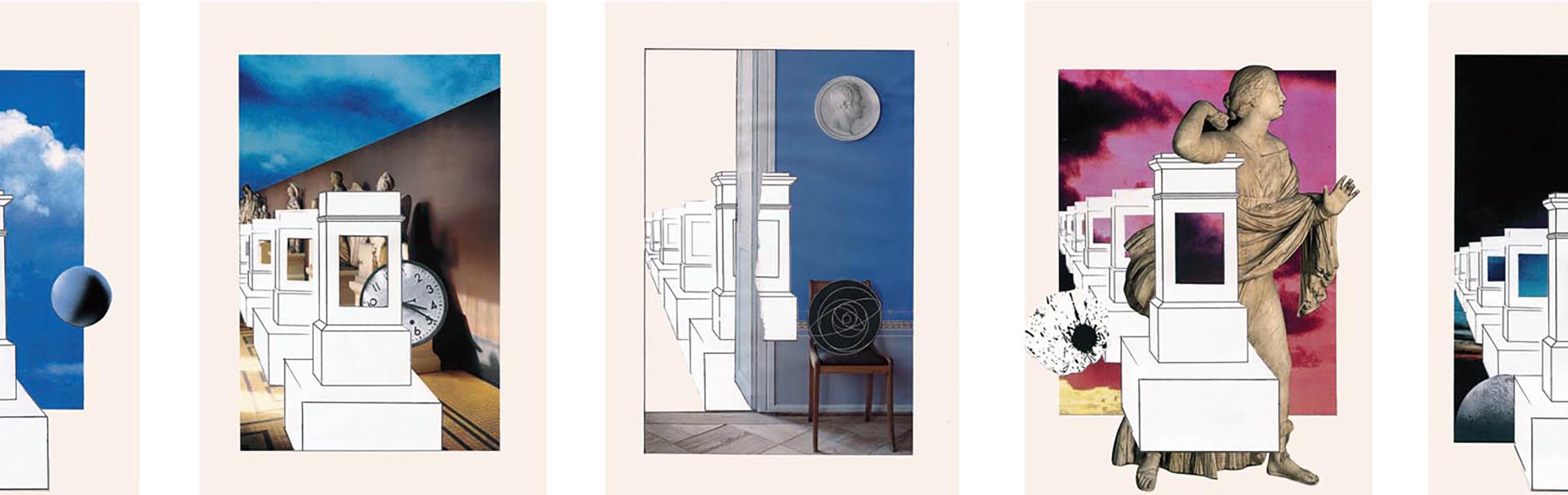
The ten plates, framed individually with or without a passepartout, must be arranged at regular intervals from each other and horizontally (overall dimensions around 31 x 240 cm). The order of the sequence is binding: after the first plate with a grey background, the plates follow one another so that together they make up the title of the edition.
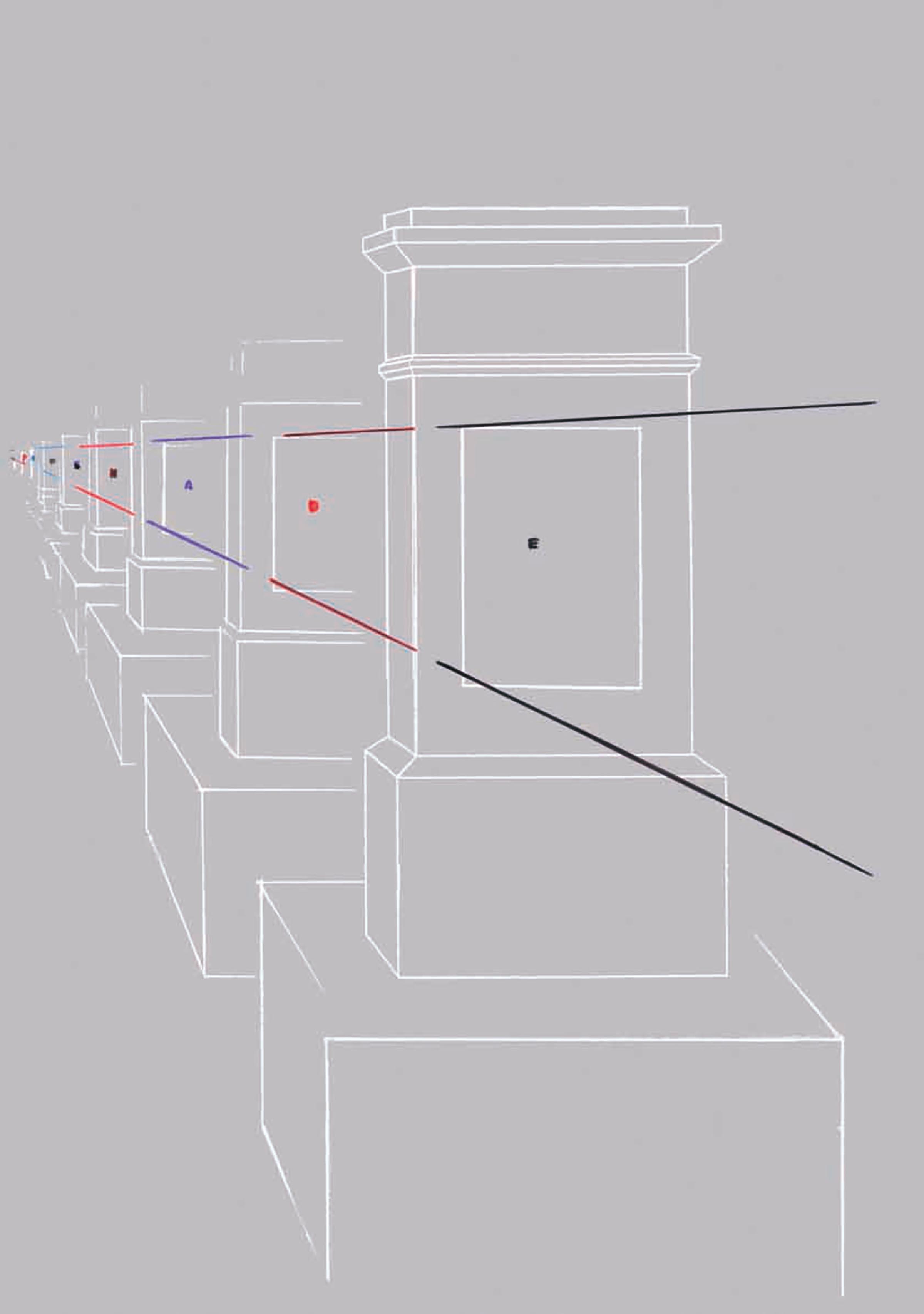
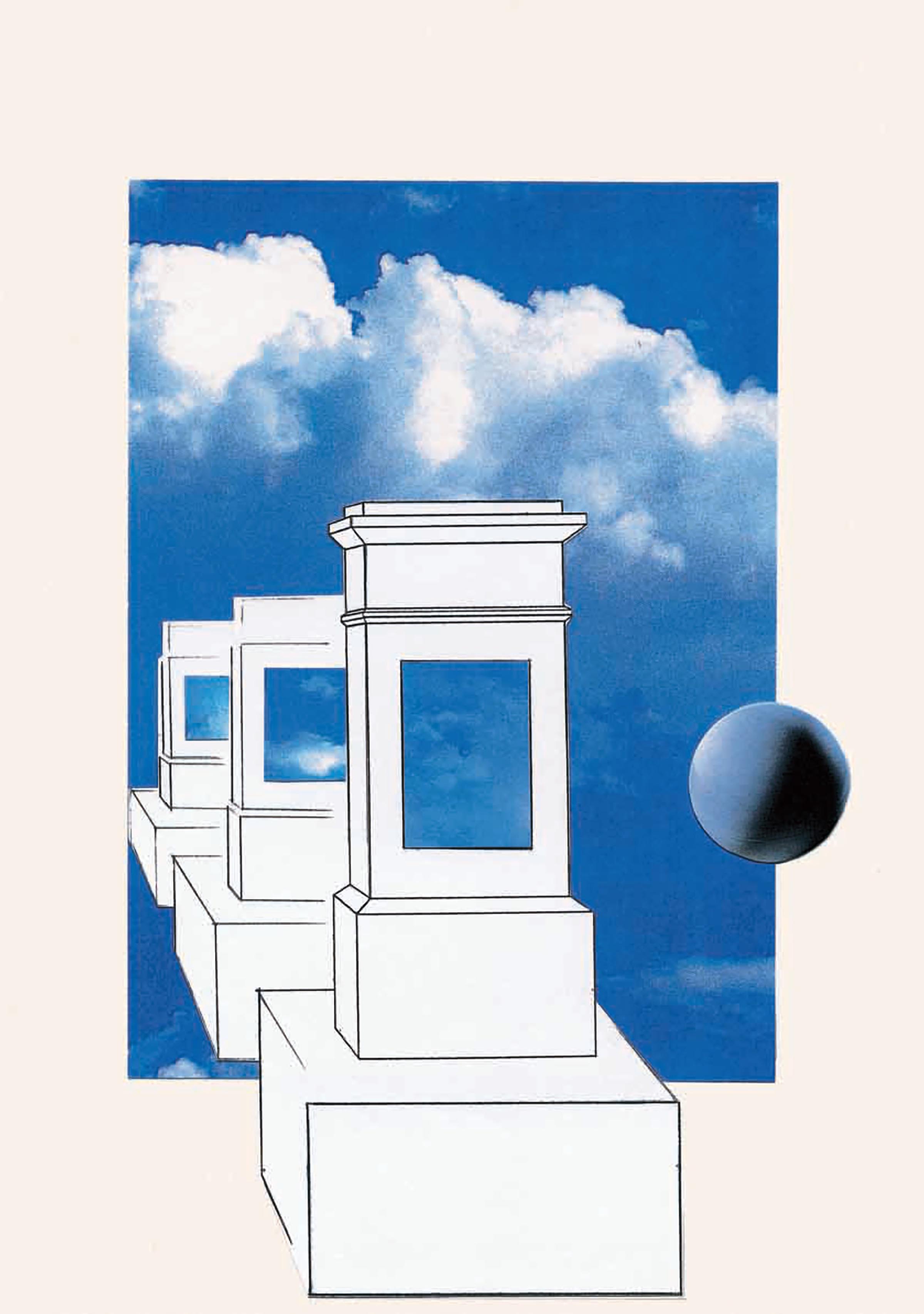
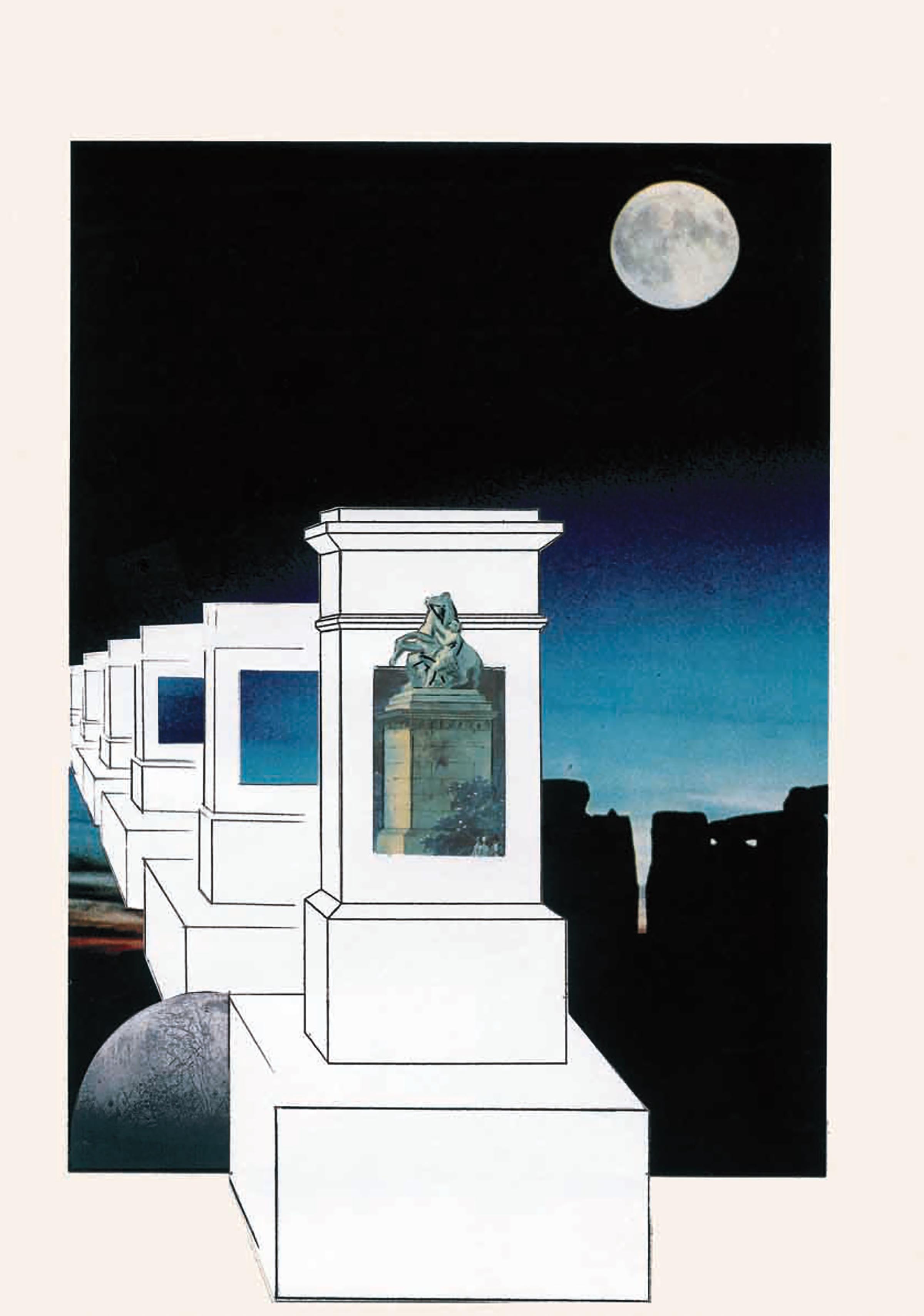
The first of ten plates, against a grey background, serves as a "frontispiece", in synthesis announcing the theme of the portfolio. The drawing in perspective reproduces a dizzying series of nine pedestals (the last ones, for as far as the eye can see, are just hinted at by a short vertical sign), each of which bears the inscription, in a different colour, of a letter in the alphabet, so that the reading from the vanishing point to the first level spells out the French word “Promenade”.
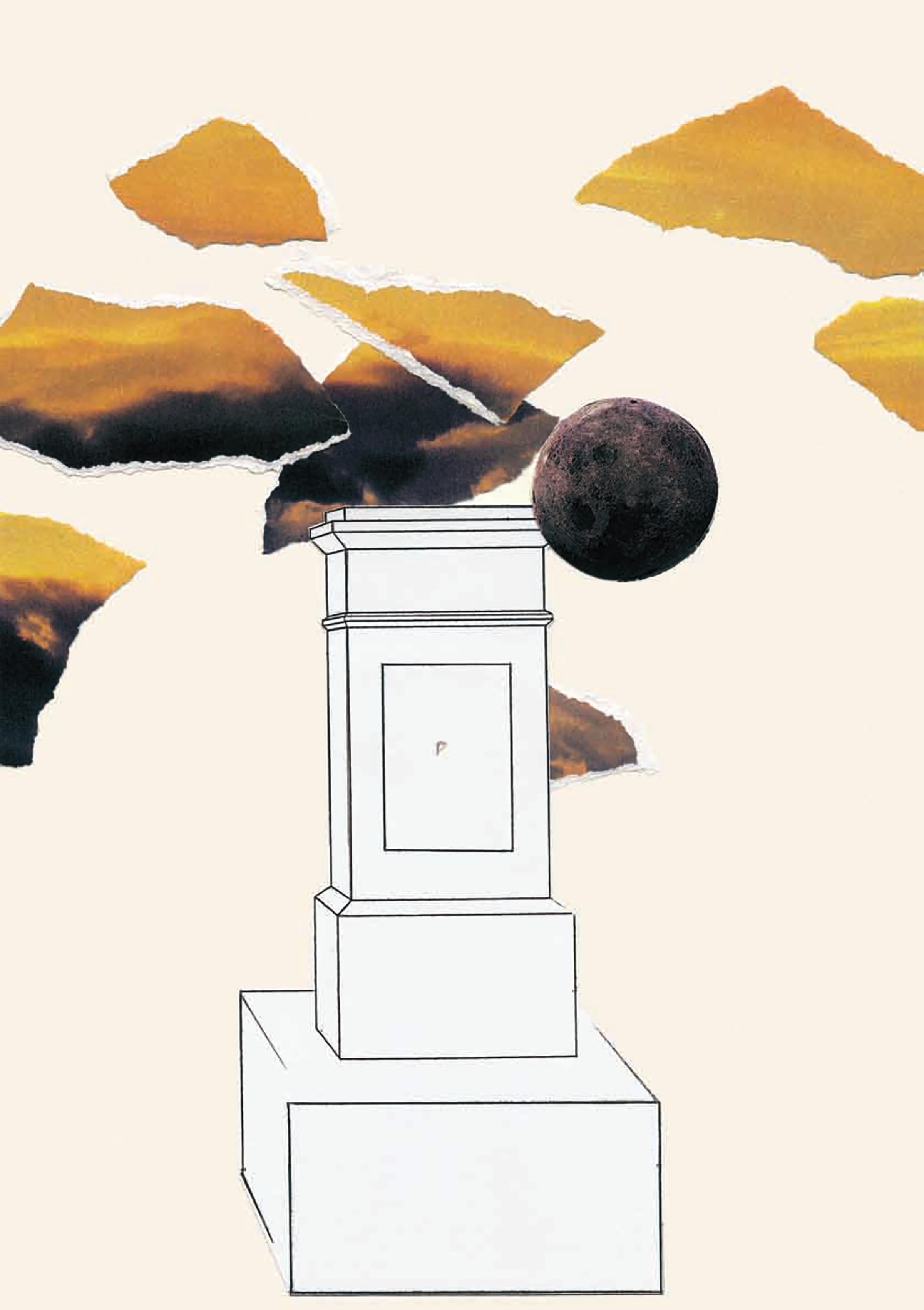
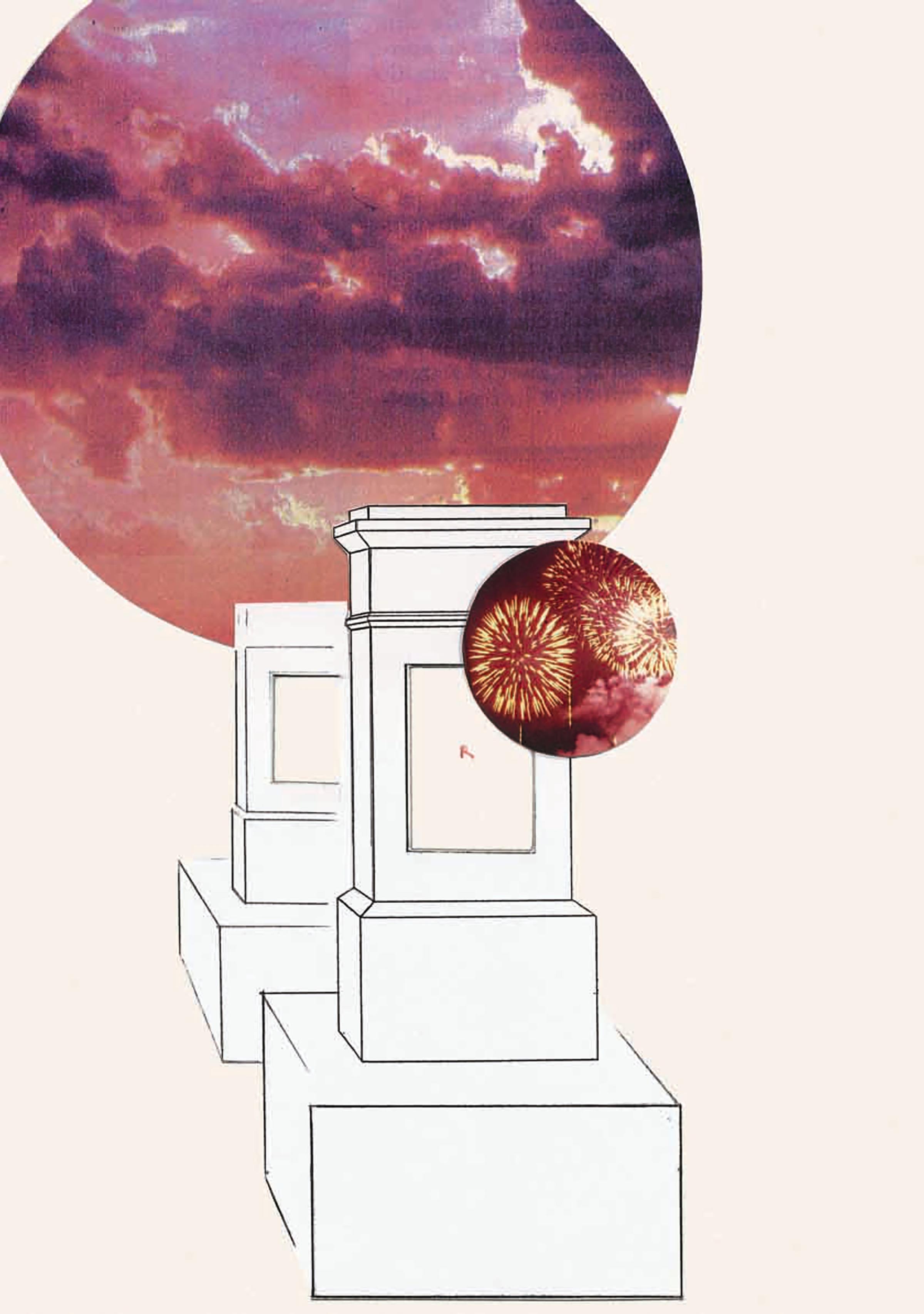
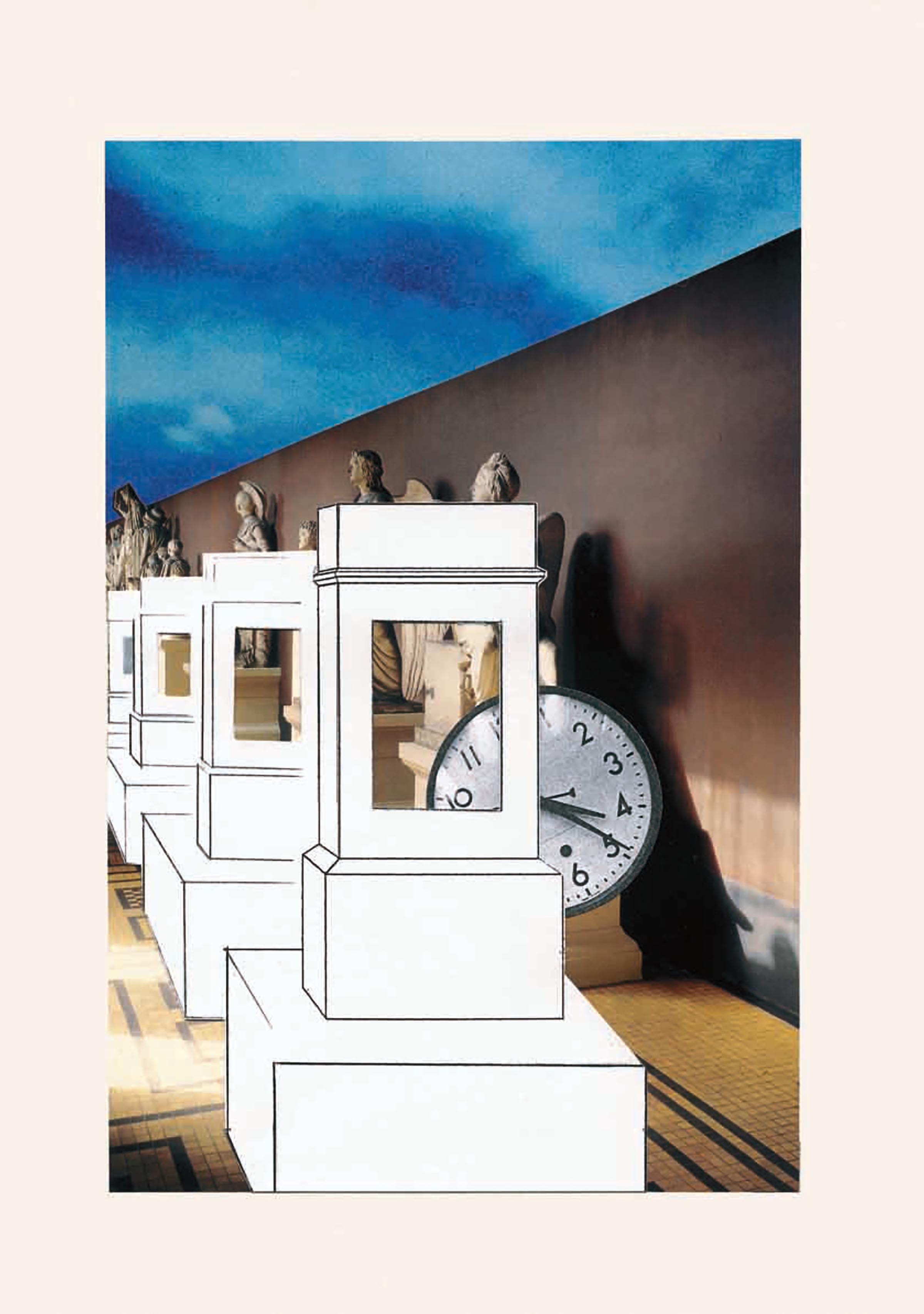
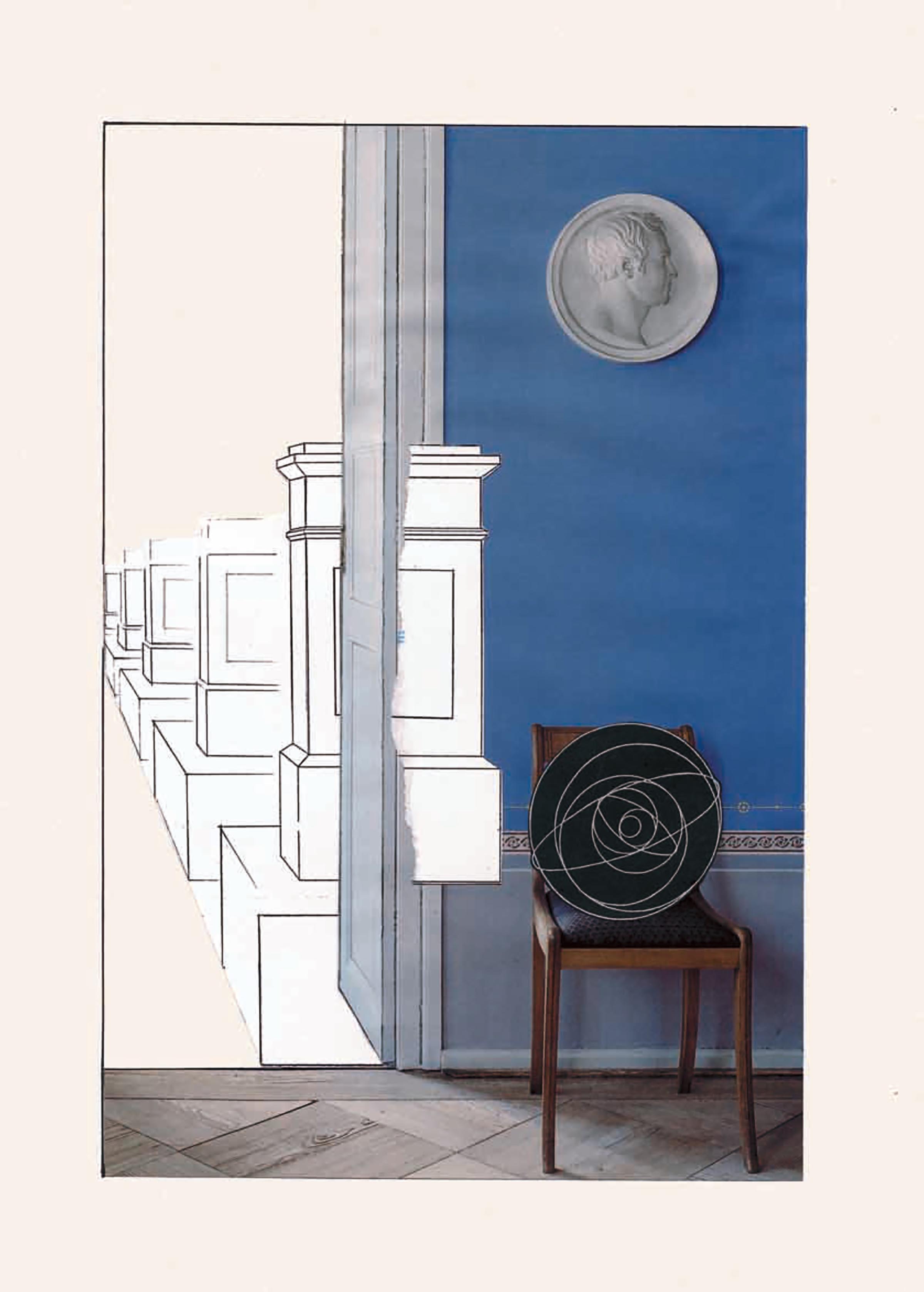
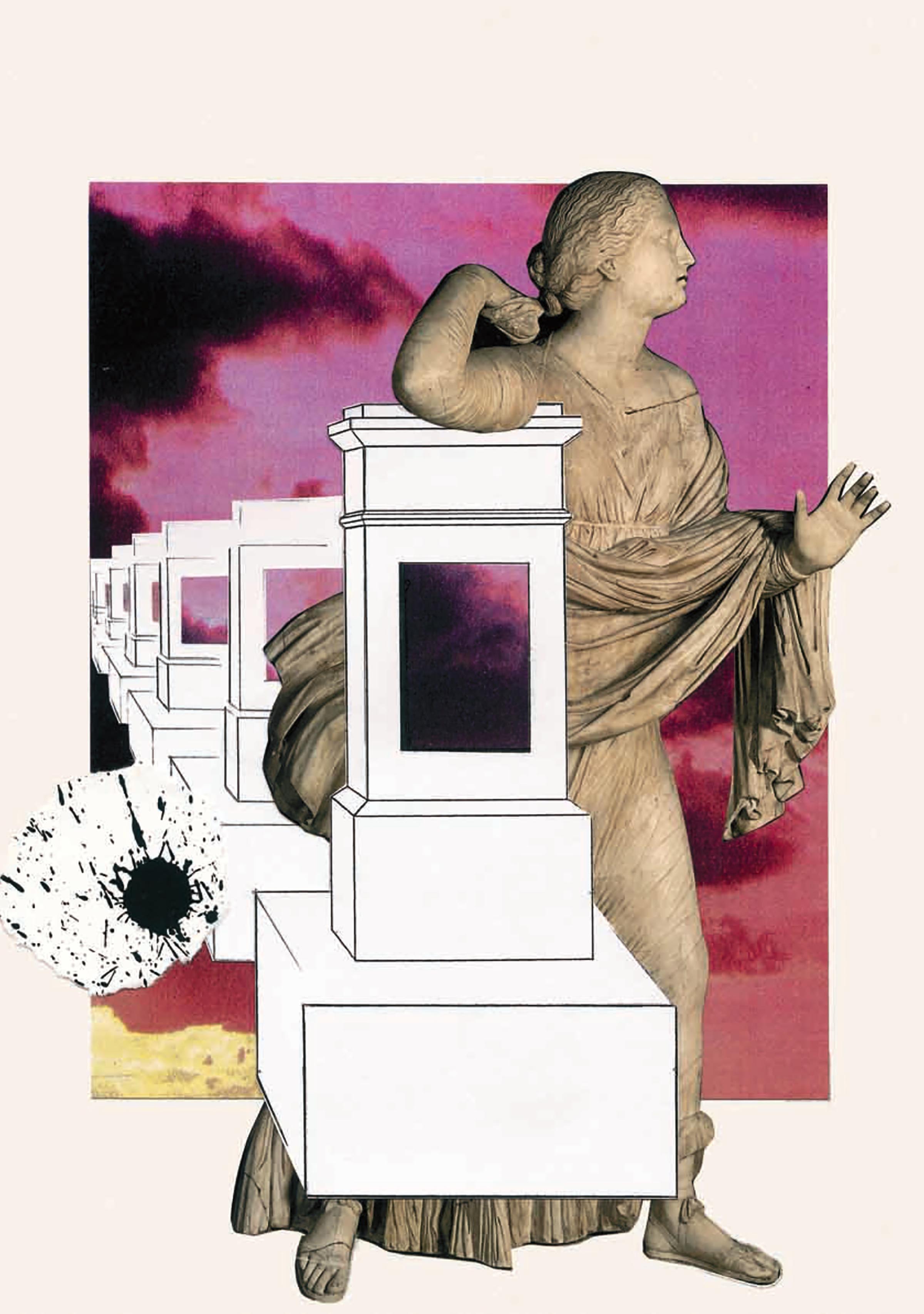
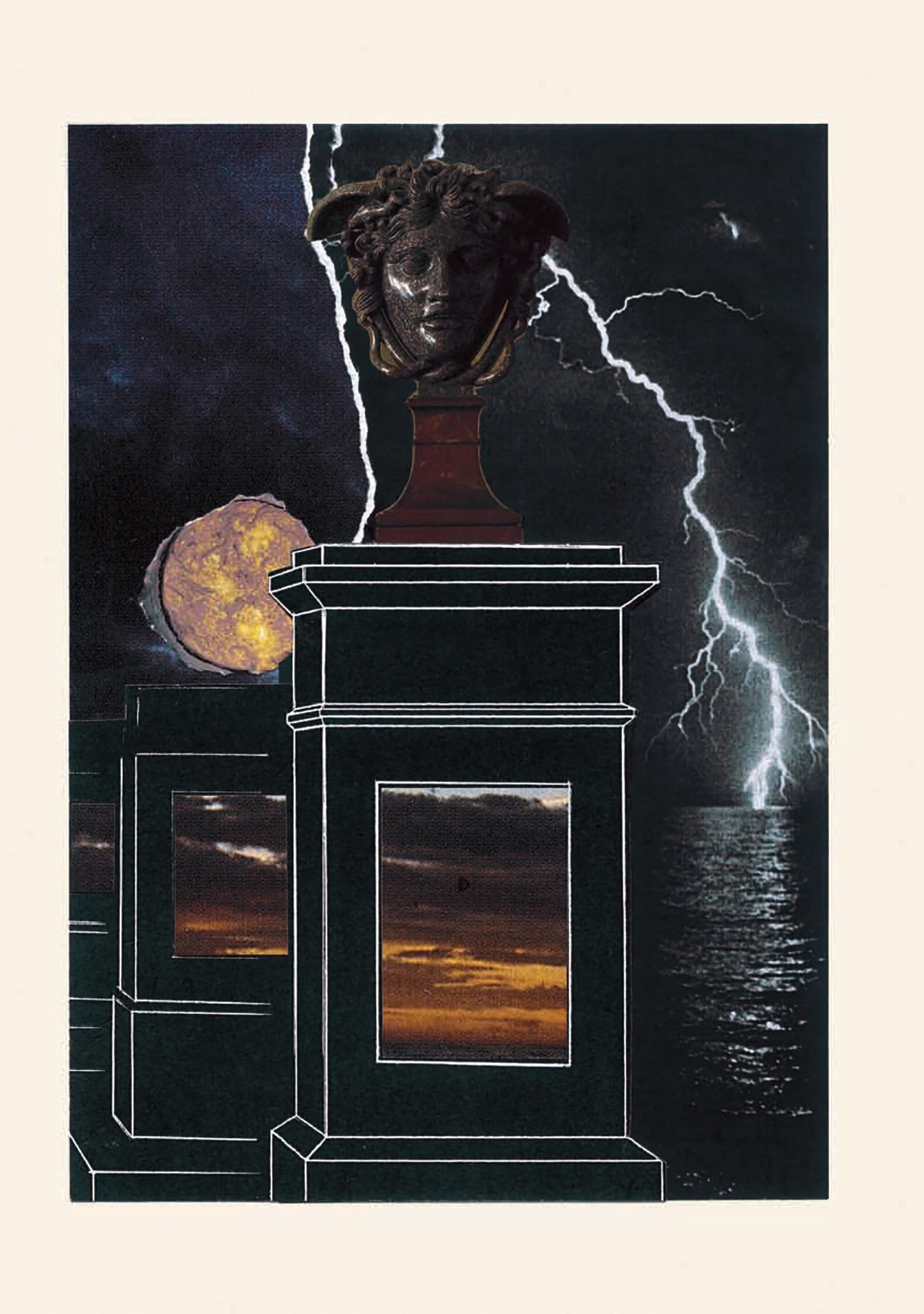
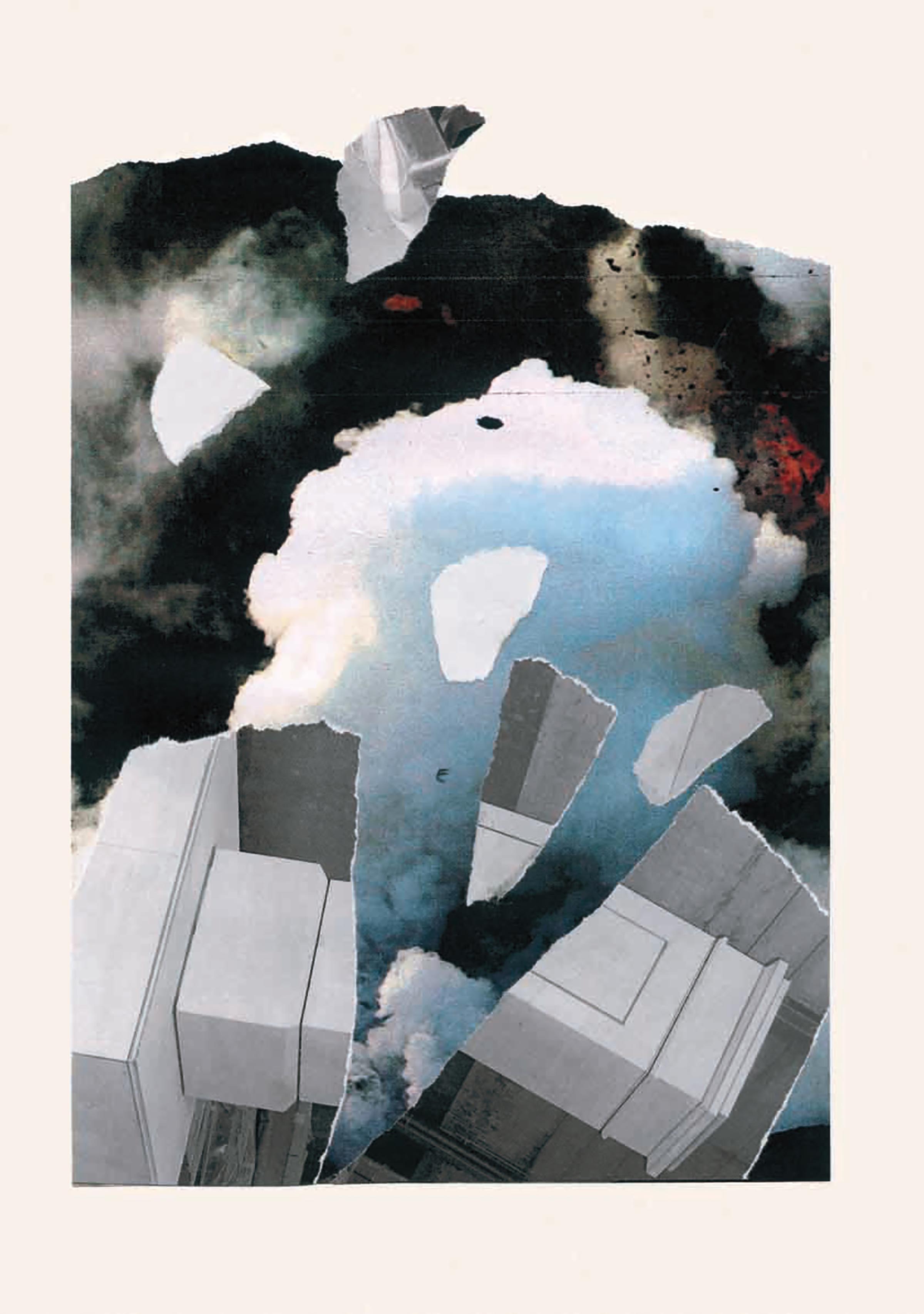
The following nine plates develop the same theme through an equal number of episodes, set against the background of a sky whose colours change from dawn to dusk. The landscape component is thus joined at times with the image of an ancient sculpture, of an interior, or of other typical motifs in the artist's iconographic repertoire. From the second to the seventh plate the number of plinths gradually grows, while the last two respectively present a close-up view of only two pedestals and, lastly, the image of a basement that has exploded in a multitude of pieces. Inscribed in each plate is a letter in the alphabet, so that in the succession of plates the word “Promenade”, referred to in the title, can be read.
The iconographic theme dates to the project Promenade commissioned from the artist in 2008 for the park of the Reggia di Venaria Reale and was resumed, in view of its imminent creation, during the period when the portfolio was being conceived. The work consisted of twenty-four pedestals arranged at regular intervals along the two sides that surround the body of water in the park opposite the Reggia; each of them accompanied by a drawing, overall they represent the twenty-four hours in the day. In the artist's own words: “[....| Twenty-four pedestals make up a theatre of would-be monuments, without figures and without voices, brought to life by incorporeal signals, figures without a name. [...] Signals, ‘pivots’, motionless witnesses to the passing of Time".1
The title Promenade was used for another print as well, made in 1992 (GPE-0088).
1 G. Paolini, note concerning the first project, 2008, held in the artist's archive. The project was reformulated a third time in 2012, and later abandoned (cf. GPO-1018). In 2012, the re-elaboration of the initial project led to the creation of another work, also titled Promenade (GPO-1024), which reproduces the layout and iconography of the portfolio, however extended to twelve elements. In the Paolinian universe the numbers 12 to 24 indicate a maximum temporal extension, an absolute duration (the 12 months of the year, the 24 hours of the day), which is also expressed in the arc of time that stretches from dawn to dusk.
• Fifth plate: image of the timepiece from Samuel Abraham Goudsmit, Robert Clairborne, Quarta dimensione: tempo (Milan: Arnoldo Mondadori Editore, 1967), p. 8 (”L’ora ufficiale americana”).
• Seventh plate: Francis Picabia, La Sainte Vierge II, 1920, Indian ink on paper, Bibliothèque Doucet, Paris.
| 2010-11 | Lugano, Studio Dabbeni, Giulio Paolini, 12 November 2010 - 26 February 2011, col. repr. in temporale 70 (Lugano), November, 2010, pp. 7-23. |
| • | G. Paolini, “Lo stesso piedistallo ricompare...”, in temporale 23, no. 70 (Lugano), November, 2010, p. [1], in Italian and English. |

